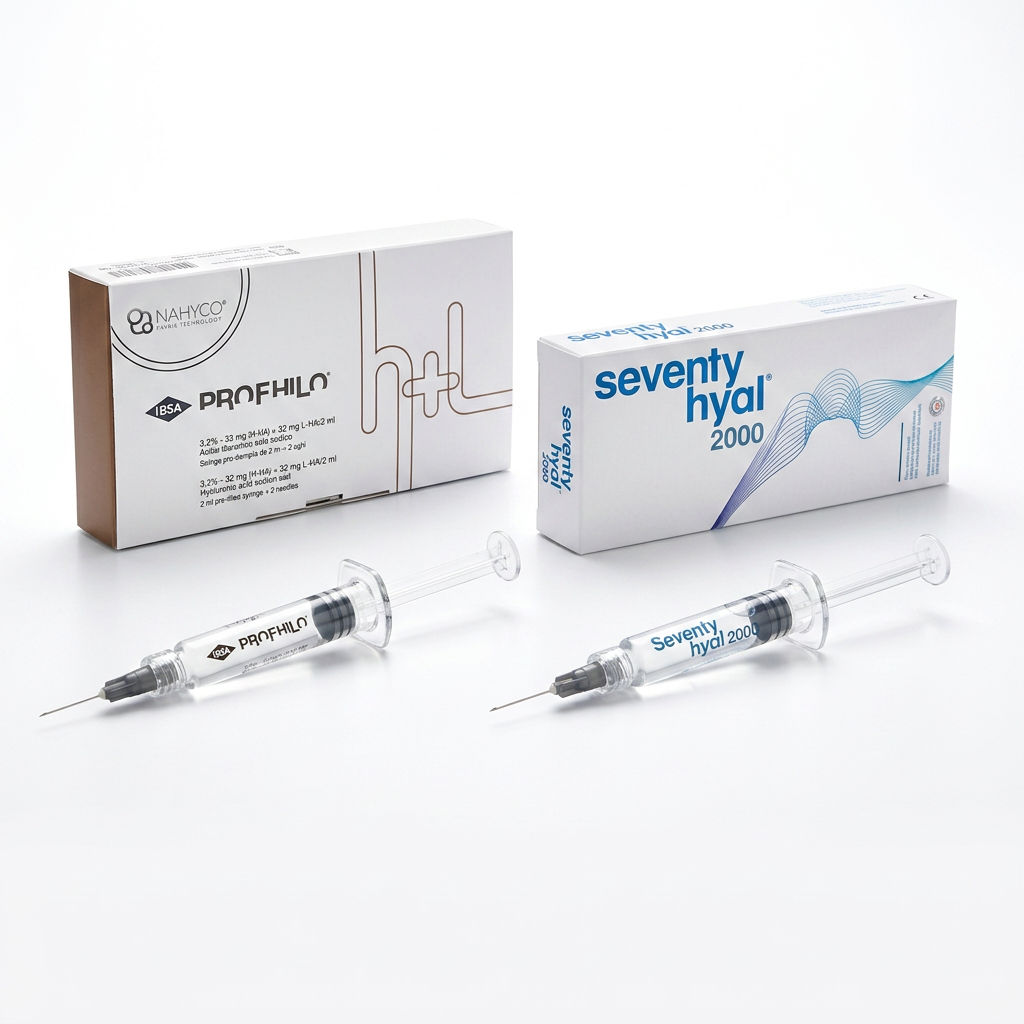


Introduction to Skin Biorevitalisers
What Are Skin Biorevitalisers?
Skin biorevitalisers are injectable treatments that aim to improve skin quality by supporting hydration, elasticity, and extracellular matrix remodeling. In clinical practice, two categories often appear in treatment planning: stabilised hyaluronic acid systems such as Profhilo, and polynucleotide-based injectables.
Why Aesthetic Practitioners Use Them
These modalities align with patient demand for gradual, natural-looking improvement in texture, firmness, and radiance, with minimal downtime. They can sit alongside neuromodulators and fillers within comprehensive treatment plans.
What is Profhilo?
Profhilo Composition and Technology
Profhilo is a high-concentration hyaluronic acid (HA) treatment manufactured with NAHYCO® hybrid technology, which thermally stabilises a blend of high and low molecular weight HA without chemical crosslinkers. The final formulation contains 64 mg of HA per 2 mL (32 mg HMW + 32 mg LMW).
How Profhilo Works in the Skin
NAHYCO® hybrid complexes present rheological properties that facilitate diffusion within the superficial subcutaneous plane. Clinical objectives include support for tissue remodeling and improvement in laxity, firmness, and hydration through stimulation of fibroblast activity and extracellular matrix turnover.
Profhilo Treatment Protocols and Patient Suitability
Common practice involves two sessions spaced about four weeks apart, delivered using the Bio Aesthetic Points (BAP) mapping (five points per side for the face) to optimise diffusion and minimise vascular risk. Maintenance is scheduled according to clinical need. Indicated areas include face, neck, and décolletage.
What are Polynucleotides?
Polynucleotide Composition and Mechanism
Polynucleotides (PN) are long-chain DNA fragments, frequently derived from marine sources, used as injectable biostimulators. Evidence from recent reviews indicates PN can support fibroblast proliferation, enhance dermal elasticity and hydration, and modulate inflammation, contributing to improvements in skin texture and fine lines.
How Polynucleotides Work in the Skin
Proposed mechanisms include scavenging of free radicals, upregulation of extracellular matrix synthesis, and activation of pathways involved in tissue repair. Literature also discusses ongoing nomenclature clarification between PN and PDRN, highlighting molecular weight considerations in product classification.
Popular Polynucleotide Brands in the UK
UK practitioners encounter multiple PN brands with product lines tailored by concentration and viscosity for different anatomical indications. Overviews and brand comparisons aimed at clinicians are available from UK aesthetic education sources and clinics.
Polynucleotide Treatment Protocols and Patient Suitability
Protocols vary by brand and indication, often delivered as a short series of sessions followed by periodic maintenance. Patient selection focuses on skin quality concerns such as fine lines, crepiness, and photoageing.
Clinical Comparison

Mechanisms of Action Compared
- Profhilo: HA-based bioremodeling via NAHYCO® hybrid complexes for hydration and tissue support in the superficial subcutaneous plane.
- Polynucleotides: DNA polymer-based biostimulation with reported effects on fibroblast activity, dermal elasticity, and inflammatory modulation.
Treatment Protocol Differences
| Aspect | Profhilo | Polynucleotides |
| Typical initial plan | Two sessions ~4 weeks apart (BAP mapping) | Brand-specific series across multiple sessions |
| Main substrate | Stabilised hybrid HA (64 mg/2 mL) | Polynucleotide chains (PN/PDRN), marine-derived |
| Primary objectives | Hydration, elasticity, tissue remodeling | Skin quality support, dermal regeneration, anti-inflammatory actions |
| Delivery plane | Superficial subcutaneous (BAP technique) | Intradermal or superficial subcutaneous depending on product |
Longevity of Results
Follow-up schedules differ by indication and patient profile. Clinical practice commonly reviews outcomes within 8–12 weeks and plans maintenance thereafter. Manufacturer and clinical education materials provide guidance for periodic touch-ups.
Combining Profhilo and Polynucleotides
Some clinics sequence modalities across a treatment course to address distinct objectives such as hydration support and dermal quality. Treatment planning should align with individual skin concerns, anatomical priorities, and product-specific guidance.
Side Effects and Safety
Profhilo Side Effects
Common events include transient erythema, tenderness, or small papules at injection points that typically self-resolve. Careful mapping and superficial placement help reduce risk.
Polynucleotide Side Effects
Reviews cite a favourable tolerability profile with mild, self-limiting reactions such as erythema or swelling. Product selection and technique remain central to safety.
Contraindications
General considerations include active infection or inflammation at the injection site, known hypersensitivity to components, and pregnancy or breastfeeding. Practitioners should follow each product’s instructions for use and local clinical governance.
Pricing and Availability in the UK
Product pricing and availability vary by supplier and package size. For verified supply to UK clinics, see the links below:
- Browse Profhilo products: https://skinonyou.com/product-category/skin-booster/profhilo-skin-booster/
- Browse Polynucleotide products: https://skinonyou.com/product-category/polynucleotide/
Conclusion
Selecting the Right Treatment for Your Clinic
Treatment planning benefits from a clear understanding of each modality’s substrate, mechanism, delivery plane, and protocol cadence. Patient selection, anatomical priorities, and expectations guide whether an HA-based bioremodeling approach or a polynucleotide-based biostimulation plan is preferred for a given case.
Professional Recommendations for UK Aesthetic Practitioners
- Match the product to the clinical objective: hydration support and tissue remodeling with HA hybrids, or dermal quality support with PN-based protocols.
- Adhere to product-specific protocols and planes of injection outlined by manufacturer education and peer-reviewed guidance.
- Set maintenance plans based on response and indication; schedule review at appropriate intervals.
Ready to stock your clinic?
- Buy Polynucleotides now: https://skinonyou.com/product-category/polynucleotide/
- Buy Profhilo now: https://skinonyou.com/product-category/skin-booster/profhilo-skin-booster/