
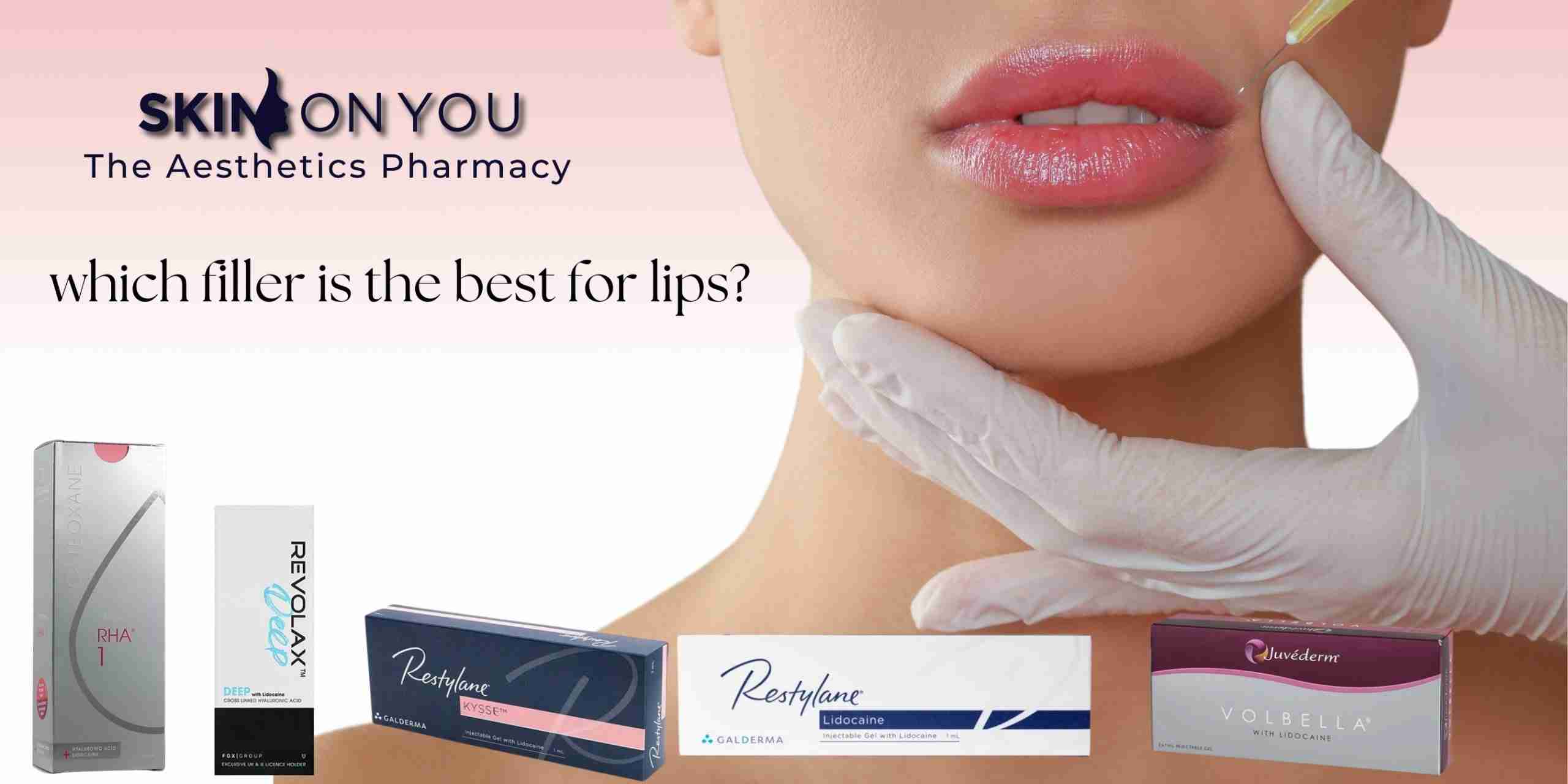
Which filler is the best for lips?
Which is the best lip filler? Aesthetic medicine is constantly evolving; over time, the demand has become greater. With this development of aesthetic medicine, clients no longer ask to volumize their lips but request a little more to define the general look of the lips. It now calls for much need on what product the practitioner will use. All of the above choices are making it difficult to pinpoint only one best suited for the lips. Thus, based on the brands that are present in the market, with different products having a certain prestige amongst cosmetics thus far in the year 2025, certain advisement given by practitioners for patients, some of the best reviews are being discussed to put forward comparisons in choosing better brand options and more.
The Science Behind Lip Fillers
Hyaluronic Acid (HA) Fillers:
Mechanism of Action: Hyaluronic Acid fillers attract and retain water, adding volume and hydration to the lips. They also stimulate the production of collagen, which can be utilized to maintain the effects in the long term.
Advantages: Natural look, reversible with hyaluronidase, and minimal risk of allergic reactions.
Poly-L-lactic Acid (PLLA) Fillers:
Mechanism of Action: Poly-L-lactic Acid fillers stimulate an over-time production of collagen and produce long-lasting and progressive results.
Advantages: Ideal for patients seeking subtlety with natural-looking effects and minimal follow-up.
Calcium Hydroxyapatite Fillers:
Mechanism of Action: Volume and stimulate production of collagen through Calcium Hydroxylapatite fillers and hence ideal for deeper wrinkles as well as for volume loss.
Advantages: Long-lasting results (12-18 months) and natural corrections.
Lip Fillers the Comparison
Lip fillers are primarily hyaluronic acid, the naturally occurring body substance that allows skin to retain moisture and achieve volume. Of course, not all fillers in the lips are created equal. A number of formulations tout several advantages in durability, texture, and in the type of contour the lip can assume. Lip Fillers Comparison Chart
To help the practitioner wade through this spectrum of options, what follows is a lip filler comparison chart that reflects the key characteristics of popular lip fillers currently on the UK market:
| Brand | Main Ingredient | Longevity | Viscosity | Key Benefits |
|---|---|---|---|---|
| Juvederm | Hyaluronic Acid | 6-12 months | Medium | Versatile, natural look |
| Restylane | Hyaluronic Acid | 6-12 months | Medium | Soft texture, natural feel |
| Teosyal | Hyaluronic Acid | 6-12 months | High | Highly hydrated and smooth |
| Belotero | Hyaluronic Acid | 6-12 months | Low | For fine lines, subtle results |
| Revolax | Hyaluronic Acid | 6-12 months | Medium | Economical, softens wrinkles |
| Aqualyx | Deoxycholic Acid | 12 months | Medium | Lipolytic agent, contouring |
| Volbella | Hyaluronic Acid | 12 months | Low | Subtle volume, ideal for fine lines |
| Restylane Kiss | Hyaluronic Acid | 6 - 12 months | Medium | For the lips, smooth results |
| Sculptra | Poly-L-lactic Acid | 24 months | High | Biostimulatory, gradual results |
| Radiesse | Calcium Hydroxylapatite | 12-18 months | High | Adds volume and stimulates collagen |
Top 10 Lip Filler Brands
There are a number of popular and well-recognized lip filler brands swarming the UK market. Following are the top 10 lip filler brands in demand amongst aesthetic practitioners:
1. Juvederm
With the facility of variety for different aesthetic requirements and the natural look provided, Juvederm holds the top.
2. Restylane
It is loved for soft textures that are very natural. Of all the brands in the lip-enhancement business, it ranks relatively high in popularity.
3. Teosyal
Teosyal loved by practitioners because of the excellent hydration levels and the smoothness of application with such great readiness.
4. Belotero
This will just act perfectly for those patients in whom slight touch-ups are required; this special formulation goes well with that for a natural look.
5. Revolax
Revolax is One of a few fairly affordable products available on the market, this brand provides relatively good quality in comparison with its cost; therefore, it is loved by many doctors.
6. Aqualyx
While famous for body contouring treatments, Aqualyx also used for lip enhancements, which, with another new modality, can result in volumizing.
7. Volbella
More subtle, from the Juvederm family, highly indicated to give small enhancements to the lips.
8. Restylane Kiss
Indicated for lip enhancement and gives even, long-lasting results; it allows the lips to maintain their natural mobility.
9. Sculptra
This is a biostimulant filler, its mode of action being the stimulation of collagen production over time, developing a more natural and progressive increase in augmentation.
10. Radiesse
Traditionally, this is used generally as a deeper line and loss of volume filler, but some practitioners have found excellent results with its use in the lips.
Considerations for Lip Fillers
While choosing the best filler for the lips, one has got to consider:
Patient Goals
The range of possible outcomes with various fillers makes clarification of patient desires as to subtle enhancement versus dramatic volume paramount.
Longevity
Most lip fillers will last anything from 6 to up to 12 months, though some Sculptra-can last 24 months. This would be something that one would have to weigh the pros for longevity against the cons of when more frequent touch-ups might be required.
Viscosity
The viscosity again would relate to how the integration of the filler into the tissue and its resultant look is. More viscous fillers may be used in giving structure while less viscous ones would likely yield a subtle finish.
Injection technique
Another important consideration is the practitioner’s injection technique. The type of filler can often be chosen based on the practitioner’s skill and experience with particular techniques, such as microdroplets or linear threading.
Anatomy of the Patient’s Lips
Perhaps it works better with shapes or sizes of the lips; for that, anatomic suitability has to be decided by the practitioners for the best outcomes.
Safety, Side Effects, and Reversibility
This section will address the safety profile of lip fillers, potential side effects, and the reversibility of the treatments.
Safety:
Most lip fillers are FDA-approved and made from biocompatible materials, such as hyaluronic acid, which is naturally occurring in the body.
Always go to a qualified practitioner to ensure the treatment is carried out safely.
Side Effects:
Redness, swelling, bruising, and soreness at the point of injection occur commonly but vanish in a couple of days.
Rare side effects include lumps, asymmetry, or allergies.
Reversibility:
HA fillers may be reversed by injecting hyaluronidase, an enzyme that breaks up the filler. This is another safety feature just in case the patient does not like the effect.
PLLA and calcium hydroxylapatite fillers are non-reversible, yet their effects come on slowly and can be refined with subsequent treatments if needed.
Practical Tips for Patients
- Consult a Qualified Practitioner: Have a qualified and trained injector perform the task to ensure safe and successful outcomes.
- Discuss Your Goals: Reveal your expected outcomes during consultation to allow the practitioner to suggest the ideal product.
- Follow Aftercare Instructions: Avoid exercise, alcohol, and sunbathing for 24–48 hours after the treatment.
- Start Gradually: If you’re new to fillers, start with a subtle enhancement and gradually build up to your desired look.
Conclusion
Diversity in the best lip fillers option, with ever-changing aesthetic landscaping, therefore becomes the leading interest for the physician. Full hope lies in the fact of how this article and, as a consequence, the lip filler comparison chart could finally allow a totally informed decision on the part of the physician for aesthetic clinics on behalf of their patients.
By 2025, practitioners can confidently advocate for the best lip filler, considering the patients’ desires and preferences, and the product characteristics to ensure satisfaction and safety. This commitment to staying updated on new products, techniques, and trends will lead to better patient outcomes and further success in aesthetic medicine.
For more information about safe and effective beauty treatments, visit [Skin On You](https://skinonyou.com/).
FAQs
- Which is the most natural filler to use?
Restylane and Teosyal are favored for natural-looking outcomes and silky feel. - How long does lip filler last?
The majority of HA fillers will last 6-12 months, while PLLA fillers can last for up to 2 years. - Are lip fillers reversible?
HA fillers can be reversed by hyaluronidase but PLLA and calcium hydroxylapatite fillers cannot be reversed. - What are side effects of lip fillers?
Bruising and swelling are common side effects but serious complications will not occur if administered by a skilled practitioner.