
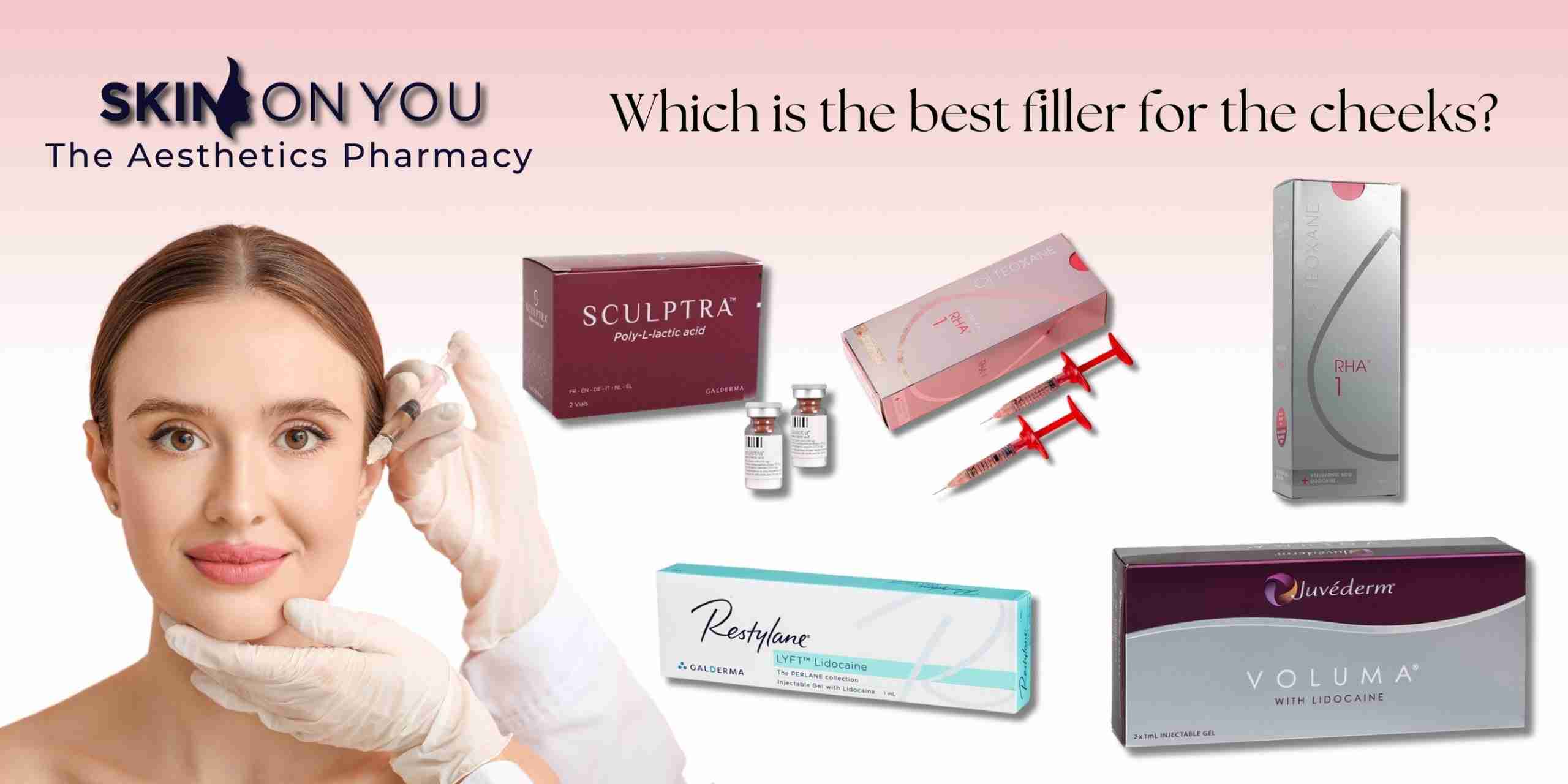
Which is the best filler for the cheeks?
Cheek fillers represent one of the most up-to-the-minute aesthetic treatments, increasingly in demand not only by patients but also by aesthetic practitioners, clinics, and doctors in the UK. With lots of different options on the market, it may be confusing to find out which might be the best cheek filler for your patients. Our goal is to empower you with knowledge about trends, formulations, and patient preference in the context of the latest developments, such as the introduction of longer-lasting fillers and more natural-looking results, leading into 2025, enabling you to make an informed decision.
Importance of Cheek Fillers
Full, well-defined cheeks are a hallmark of youth and vitality, enhancing the facial structure. As we age, this natural volume diminishes, leading to sagging skin and a loss of radiance. Cheek fillers, by restoring lost volume and accentuating facial contours, are a vital tool in the aesthetic practitioner’s arsenal, rejuvenating the face and restoring a youthful appearance, empowering you to bring back the glow of youth to your patients.
Things to Consider When Selecting a Cheek Filler
Durability
The first question in most practitioners’ minds will be how long it will take before the filling starts to wear out. Most of the practitioners would want HA fillers due to the fact that most of them last for a period between six months and two years, a nature looking and feeling just like your own. These products will change over the next few years, with change comes longer-lasting results that still maintain a natural appearance.
Viscosity
The thicker the viscosity, or texture, of the filler, the more readily the substance will meld with the surrounding tissue. Thicker fillers are great for deeper injections to provide lift and structure where more watery versions can provide a far more subtle enhancement.
Safety and Allergic Reactions
Efficiency and safety should be clinically tested. The occurrence of allergic reactions due to certain types means use of reputed brands, which ensure better safety, is always advisable.
Ease of Injection
How easily the filler can be injected might affect the final outcome. Those fillers which come in quickly pre-filled syringes, with smooth applications, save time and result in comfort for the patient.
Safety, Side Effects, and Risk Avoidance
Common Side Effects:
Swelling, redness, bruising, and temporary asymmetry.
Minimizing Risks:
Use a qualified injector, avoid taking blood-thinning medications in advance, and follow good aftercare.
Top Contenders for the Best Cheek Filler
As we approach the midpoint of 2025, a few standout options are emerging as potential frontrunners for the best cheek fillers. These contenders, each with its unique benefits, are worth considering for your practice.
1. Juvederm Voluma
Juvederm Voluma is pretty famous among professionals because it gives extra volume and reshapes your cheeks. Its smooth feel and consistency, along with a pretty long-lasting effect, makes many professional practitioners go just for this option.
2. Restylane Lyft
Restylane Lyft is This too is a great product, providing lift and volume, but in its unique formulation, it allows really great versatility in cases that may indicate injections for a number of different areas of the face, hence adding diversity to any practitioner’s tool kit.
3.Sulptra
Although technically not a “filler,”Sculptra since it stimulates the formation of collagen, thereby building volume over time, it’s great for patients who want less radical improvement but see a very effective enhancement a little later on.
4. Teosyal RHA
The hyaluronic acid fillers in this range are resilient; they adapt to the facial dynamics and hence are suited for natural-looking results. In an innovative formula, this one can let movement happen while maintaining volume. Very apt for the cheeks.
Future of Cheek Fillers
It’s very important to stay updated on the latest advancements in technology and new formulations. This will make sure that you have a wide range of choices to offer your patients when it comes to cheek fillers, keeping you informed and prepared for the future. Remember, the more you learn, the more you can offer your patients and the more engaged you’ll be in your practice.
Ultimately, the decision on the best filler for cheeks in 2025 should be made with the patient’s needs and preferences in mind. By considering the factors such as durability, safety, and patient preference, among others, you can make sure the best results and leave your clients feeling confident and satisfied. This commitment to patient satisfaction is at the heart of aesthetic practice, and it’s a responsibility we all share as practitioners.
For more information about safe and effective beauty treatments, visit [Skin On You](https://skinonyou.com/).
FAQs
1. What is the recovery time?
Most of the patients return to normal activity levels instantly, with only minimal bruising and swelling that resolves in a few days.
2. What is the average cost?
Cost is also measured by the volume and type of filler, typically between £500 and £1,500 for a treatment.
3. Can cheek fillers be used in conjunction with other treatments?
Cheek fillers can be used with temple fillers or Botox to achieve a more even appearance to the face.