
Description
Clinical Description
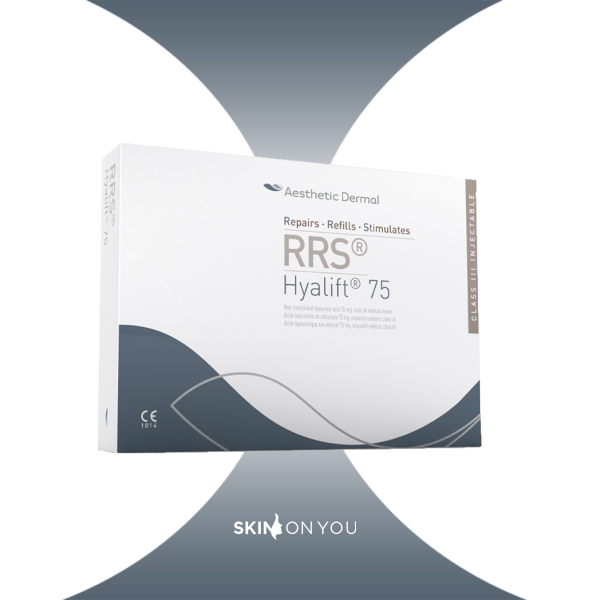
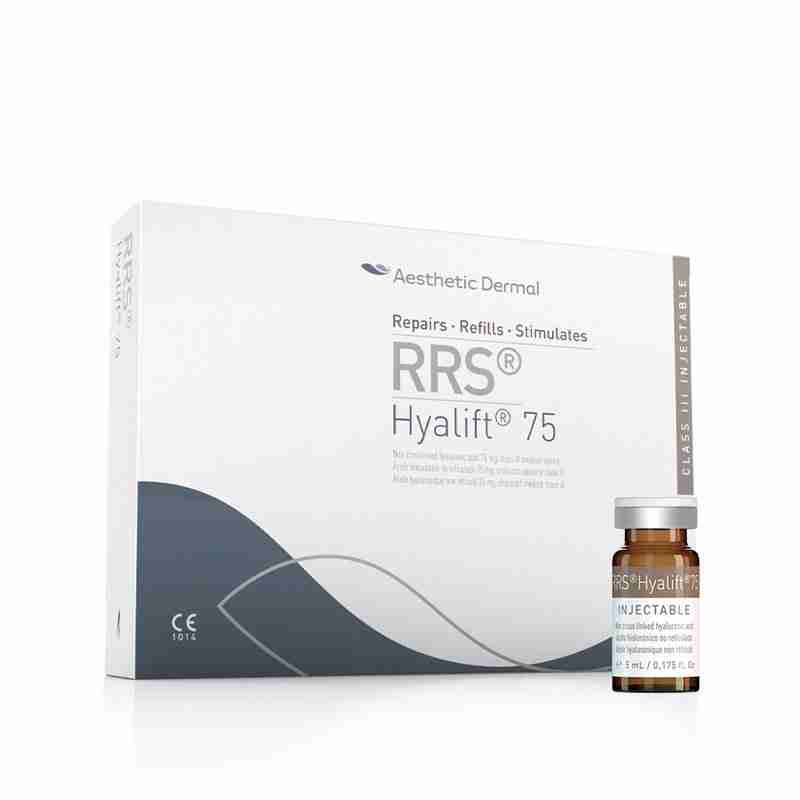
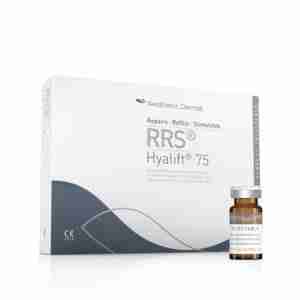
RRS® Hyalift 75 is a CE-marked injectable dermal implant and skin biorevitalisation product designed for the treatment of skin photoageing, dermal atrophy, dehydration, and age-related deterioration in skin quality. The formulation contains non-cross-linked hyaluronic acid (HA) at a concentration of 15 mg/mL (75 mg per 5 mL vial), suspended within a protective solution containing amino acids and antioxidant components intended to support dermal hydration and extracellular matrix maintenance.
Unlike volumising dermal fillers, RRS® Hyalift 75 is primarily intended to improve skin hydration, elasticity, texture, and overall skin quality rather than create structural volume. The product is commonly used in professional aesthetic medicine protocols targeting facial and body areas affected by photoageing and tissue laxity.
According to manufacturer information, treatment indications include skin photoageing and its consequences, dermal atrophy, and hydration support for ageing skin.
What RRS® Hyalift 75 Is Similar To
RRS® Hyalift 75 belongs to the category of injectable skin boosters and biorevitalisation products. It is most comparable to products such as Profhilo® and Jalupro®, although important differences exist.
Like Profhilo®, RRS® Hyalift 75 uses hyaluronic acid to improve hydration and skin quality. However, Profhilo® contains hybrid cooperative complexes of high- and low-molecular-weight HA, whereas RRS® Hyalift 75 uses non-cross-linked hyaluronic acid combined with amino acids and antioxidant compounds.
Compared with Jalupro®, RRS® Hyalift 75 shares the inclusion of amino-acid support ingredients intended to assist extracellular matrix maintenance. However, the specific formulation, concentration profile, and manufacturer protocols differ.
RRS® Hyalift 75 is generally positioned as a hydration-focused biorevitalisation product for skin quality enhancement rather than a volumising filler or collagen-stimulating implant.
Treatment Areas / Indications
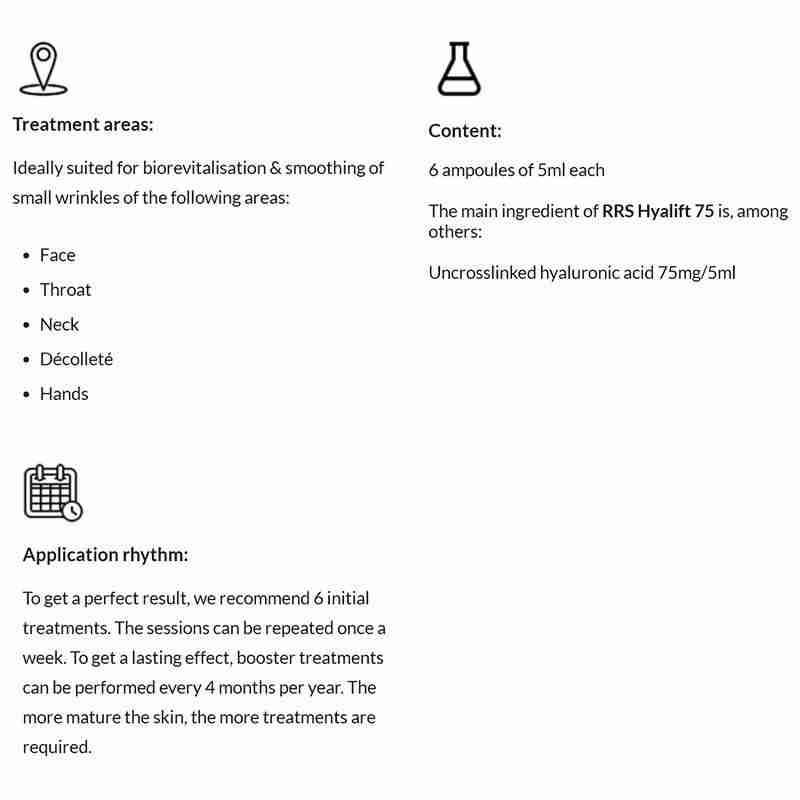
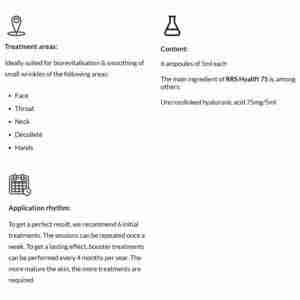
According to manufacturer information, commonly treated areas include:
- Face
- Neck
- Décolletage (cleavage)
- Back of hands
- Inner arms
- Inner thighs
- Peri-umbilical area
- Abdomen, including stretch-mark-prone areas
Primary indications include:
- Skin photoageing
- Dermal atrophy
- Dehydrated skin
- Fine superficial wrinkles
- Reduced skin elasticity
- Age-related skin quality deterioration
Usage / Administration (IFU-Only Section)
Treatment frequency / number of sessions: Not provided by manufacturer in publicly available documentation.
Professional-use statement: RRS® Hyalift 75 is intended to be administered only by legally qualified healthcare professionals in authorised clinical settings under appropriate aseptic conditions.
Important: Some practitioners describe intradermal mesotherapy protocols using fine-gauge needles. However, these approaches are not included in the manufacturer’s publicly available official IFU referenced for this description.
Ingredient List
Active Ingredients
- Non-cross-linked hyaluronic acid (75 mg / 5 mL)
- Hyaluronic acid concentration: 15 mg/mL
Supporting Ingredients
- Amino acids
- Antioxidant compounds
- Polyphenol-containing protective buffer system
Lidocaine
- Lidocaine: No
Presentation & Longevity
Packaging
- 6 × 5 mL sterile vials
- Total pack volume: 30 mL
Product Type
- Injectable dermal implant
- Skin booster / biorevitaliser
- CE-marked medical device
Longevity
The manufacturer does not provide a definitive duration of aesthetic effect in publicly available documentation.
Longevity: not provided by manufacturer.
Clinical outcomes may vary according to treatment protocol, patient characteristics, lifestyle factors, and practitioner assessment.
Safety Notes / Contraindications
The full IFU should always be consulted before use.
Key precautions include:
- Use only by appropriately qualified medical professionals.
- Do not use in patients with known hypersensitivity to any product component.
- Avoid treatment in areas with active infection, inflammation, or skin disease.
- Treatment should be postponed in patients presenting with local infectious processes at the intended treatment site.
Where the complete IFU is unavailable, standard injectable-device precautions apply, including careful patient assessment and adherence to aseptic technique.
Regulatory Status
- CE-marked medical device (Class III)
- Intended for professional medical use only
- Regulatory classification confirmed by manufacturer documentation.
No FDA approval information was identified in publicly available documentation reviewed for this product.
FAQ
1. What is RRS® Hyalift 75?
RRS® Hyalift 75 is an injectable skin biorevitalisation product containing non-cross-linked hyaluronic acid at 15 mg/mL combined with amino acids and antioxidant-supporting ingredients. It is intended to address skin photoageing, hydration loss, and dermal atrophy while supporting overall skin quality and elasticity.
2. How does RRS® Hyalift 75 work?
The formulation delivers non-cross-linked hyaluronic acid directly into the skin, where it contributes to hydration and water retention. The accompanying amino acids and antioxidant components are designed to support extracellular matrix maintenance and skin revitalisation processes.
3. Is RRS® Hyalift 75 a dermal filler?
RRS® Hyalift 75 differs from traditional volumising dermal fillers. While it contains hyaluronic acid, its primary purpose is skin hydration and biorevitalisation rather than structural volume replacement. It is generally used to improve skin quality, texture, and hydration.
4. Which areas can be treated with RRS® Hyalift 75?
Manufacturer information identifies several treatment areas including the face, neck, décolletage, back of the hands, inner arms, inner thighs, peri-umbilical region, and abdomen. These areas are commonly affected by photoageing, dehydration, and dermal atrophy.
5. How long do results from RRS® Hyalift 75 last?
The manufacturer does not publish a specific longevity claim for RRS® Hyalift 75 in publicly available documentation. Treatment duration varies according to patient factors, treatment protocols, and practitioner recommendations. For this reason, expected longevity should be discussed during professional consultation.