
Description
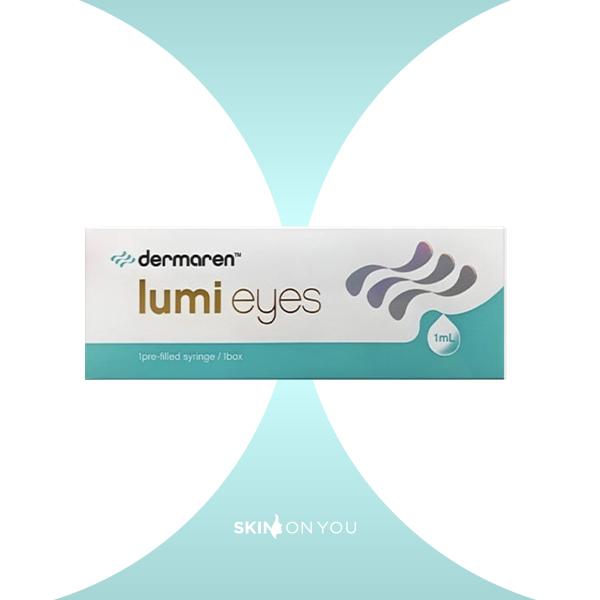
Lumi Eyes 1x1ml – Polynucleotide Injectable for Periorbital Skin Regeneration
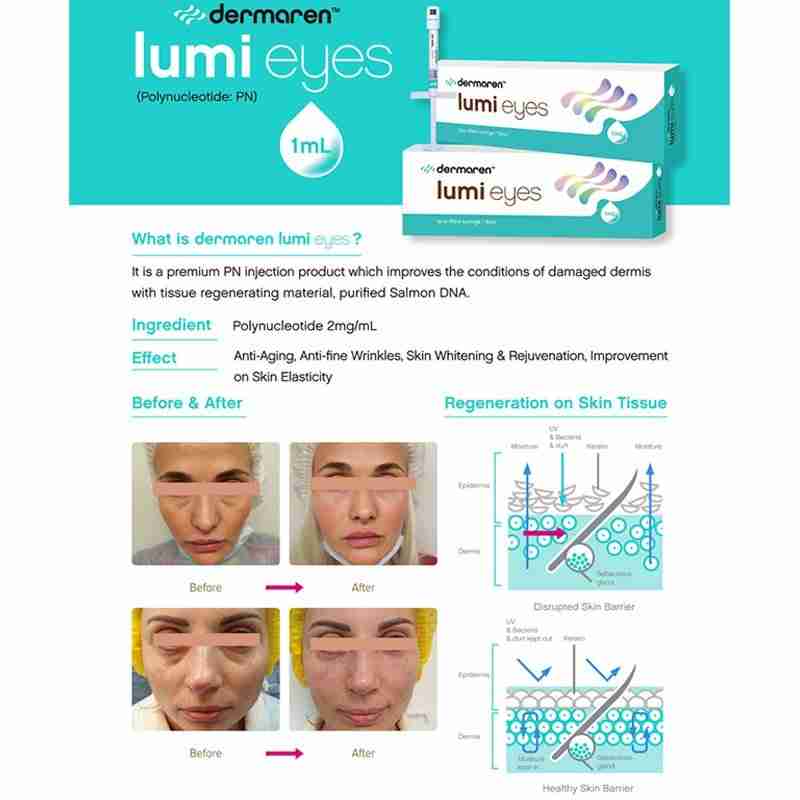
Lumi Eyes is an injectable polynucleotide (PN/PDRN)-based medical aesthetic device specifically developed for periorbital skin rejuvenation. The product is designed to improve under-eye skin quality by targeting dermal thinning, dehydration, fine lines, dark circles, and fatigue-related changes without adding volume.
The formulation contains high-purity polynucleotides derived from DNA fragments, which act as biostimulatory agents within the dermis. When administered intradermally, Lumi Eyes supports fibroblast activation, extracellular matrix repair, improved microcirculation, and tissue hydration, making it suitable for patients presenting with fragile, crepey, or photo-aged under-eye skin.
Lumi Eyes is non-volumising and intended for regenerative skin improvement rather than contour correction or filling of the tear trough.
What Lumi Eyes Is Similar To
Lumi Eyes can be considered alongside other regenerative eye-area injectables such as Rejuran® i, Nucleofill® Eyes, or Sunekos® Performa, which aim to improve skin quality and biological function rather than volumisation.
-
Rejuran® i uses polynucleotides with a focus on dermal repair and anti-inflammatory activity.
-
Sunekos® combines amino acids and HA to stimulate collagen and elastin synthesis.
-
Lumi Eyes relies specifically on polynucleotide-driven tissue regeneration, hydration, and microvascular support.
Unlike traditional HA dermal fillers (e.g. Juvederm® or Restylane®), Lumi Eyes does not provide structural lift or bulk and should not be used as a tear-trough filler substitute. This comparison is for clinical orientation only and does not imply interchangeability.
Treatment Areas / Indications
According to distributor and manufacturer documentation, Lumi Eyes is indicated for the periorbital region, particularly where skin quality deterioration is present.
Primary indications:
-
Under-eye (infraorbital) area
-
Periorbital fine lines and superficial wrinkles
-
Thin, crepey, or lax under-eye skin
-
Dark circles related to poor microcirculation or dermal thinning
-
Fatigue-related under-eye appearance
Usage / Administration (IFU-based where available)
-
Injection depth: Superficial to mid-dermal (intradermal mesotherapy technique)
-
Technique: Micro-papular or linear threading, depending on practitioner preference
-
Needle / cannula: Commonly 30–33 G needles (not always supplied)
-
Frequency / number of sessions:
-
Recommended course: 3 treatment sessions, spaced 3–4 weeks apart
-
Maintenance: Every 6–9 months, depending on patient response
-
-
Professional-use disclaimer: For administration by trained medical or aesthetic professionals only under aseptic conditions
If a specific parameter is not explicitly stated in the official IFU, it is considered “not provided by manufacturer”.
Ingredient List (Lumi Eyes Ingredients)
Active component:
-
Polynucleotides (PN / PDRN) – DNA fragments typically within the 250–350 kDa range, supporting tissue regeneration and dermal repair
Other components:
-
Sodium chloride
-
Phosphate buffer system
-
Water for injection
Lidocaine: Not provided by manufacturer
Cross-linking agents (e.g. BDDE): None
Presentation & Longevity
-
Presentation: 1 × 1 ml pre-filled sterile syringe
-
Lumi Eyes (1x1ml) format intended for precise periorbital treatment
-
Shelf-life: Refer to product packaging and IFU for expiry
-
Longevity (treatment duration):
Clinical reports suggest visible improvement lasting 6–12 months following a complete treatment course, depending on patient age, skin condition, and lifestyle factors.
Safety Notes / Contraindications
-
Contraindicated in patients with known hypersensitivity to any component
-
Avoid use in areas with active infection, inflammation, or compromised skin
-
Not recommended during pregnancy or breastfeeding unless advised by local regulation
-
Do not inject intravascularly or into muscle tissue
-
Single-use product only; do not reuse syringe
Regulatory Status
-
CE-marked medical aesthetic device (classification dependent on jurisdiction)
-
Regulatory status may vary by country; practitioners should verify compliance via IFU and local distributor documentation
FAQ
1. How does Lumi Eyes treatment work?
Lumi Eyes treatment works by delivering polynucleotides into the dermis of the under-eye area. These biologically active DNA fragments stimulate fibroblast activity, improve extracellular matrix repair, support hydration, and enhance microcirculation, resulting in improved skin texture, elasticity, and brightness.
2. Is Lumi Eyes the same as a dermal filler?
No. Lumi Eyes is not a volumising filler. Unlike cross-linked HA fillers designed to lift or fill, Lumi Eyes focuses on regenerative skin improvement and is unsuitable for tear-trough volumisation.
3. How many sessions are required and how long do results last?
A standard protocol includes three sessions spaced 3–4 weeks apart. Results typically last 6–12 months, depending on individual skin condition and maintenance strategy.
4. Can Lumi Eyes be combined with other treatments?
Yes. Lumi Eyes is commonly combined with microneedling, chemical peels, skin boosters, or polynucleotide-based facial treatments as part of a comprehensive regenerative protocol, provided appropriate timing and skin recovery are respected.
5. What are the key safety considerations?
Due to the delicate vascular anatomy of the periorbital region, advanced anatomical knowledge and conservative technique are essential. Practitioners should avoid deep injections and monitor for swelling or bruising post-treatment.