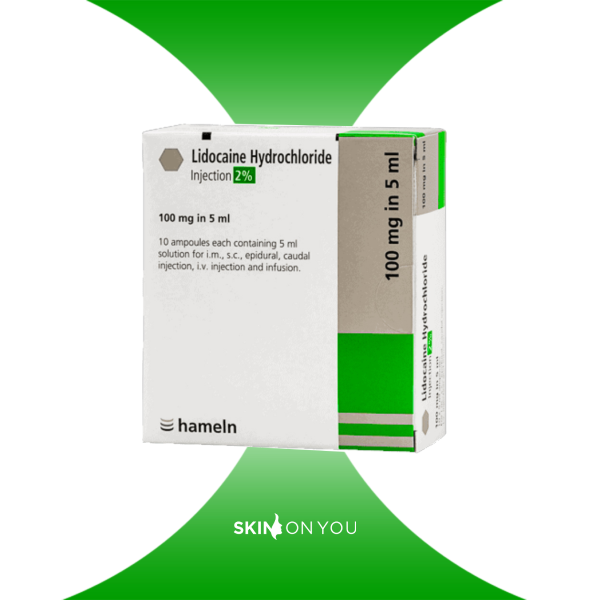
Lidocaine 2% 100mg (10 × 5mL) provides healthcare professionals with a reliable injectable local anaesthetic for a wide range of clinical procedures. Each sterile 5 mL ampoule contains 100 mg of lidocaine hydrochloride, offering consistent dosing and rapid local anaesthesia when administered by trained medical practitioners.
Commonly used across minor surgery, dermatology, dentistry and selected aesthetic procedures, lidocaine helps improve procedural comfort while maintaining a well-established safety profile when used according to the manufacturer’s prescribing information. Clinics looking to buy Lidocaine 2% 100mg (10 × 5mL) or compare the lidocaine 2 injection price should always purchase through licensed UK pharmaceutical suppliers.
Pricing is available to registered aesthetic professionals only.
Sign in to view pricesLidocaine 2% 100mg (10 × 5mL) is a sterile prescription-only local anaesthetic solution containing 100 mg lidocaine hydrochloride in each 5 mL ampoule (20 mg/mL). It is intended for use by qualified healthcare professionals to produce temporary local or regional anaesthesia by reversibly blocking sodium channels within nerve membranes, thereby preventing the initiation and transmission of nerve impulses.
Within medical aesthetics, lidocaine injection may be used by appropriately trained clinicians to improve patient comfort during selected procedures where clinically appropriate. However, its administration should always follow the authorised Summary of Product Characteristics (SmPC) and local clinical protocols. Lidocaine provides a rapid onset of anaesthetic action, with duration varying according to dose, injection site and vascularity.
Each ampoule is supplied as a sterile solution for injection and is intended for professional use only.
Lidocaine hydrochloride belongs to the amide local anaesthetic class and is comparable to products containing the same active ingredient, such as Lidocaine Hydrochloride 1% Injection, as well as other injectable local anaesthetics including Mepivacaine. All work by temporarily blocking nerve conduction to produce reversible local anaesthesia.
Compared with 1% lidocaine, the 2% formulation provides twice the concentration of active ingredient per millilitre, allowing clinicians to select an appropriate volume depending on the intended procedure and maximum recommended dose.
Unlike dermal fillers, skin boosters or injectable biostimulators, lidocaine does not restore volume or stimulate collagen production. Its purpose is solely to provide local anaesthesia before or during medical procedures.
This comparison is provided for clinical orientation only and does not imply interchangeability.
According to the manufacturer’s prescribing information, lidocaine injection may be indicated for local or regional anaesthesia during appropriately selected medical procedures, including:
Administration should be performed only by appropriately trained healthcare professionals using aseptic technique.
The manufacturer’s prescribing information states that dosage should be individualised according to:
Some practitioners may use lidocaine during aesthetic procedures for patient comfort; this is not described as a specific administration protocol within the manufacturer’s official prescribing information.
Active ingredient
Excipients
Hyaluronic acid concentration: Not applicable.
Contains lidocaine: Yes — 2%.
Presentation
Duration of action
The duration of local anaesthesia varies depending on:
An exact treatment longevity is not provided by the manufacturer because duration differs according to clinical use.
Lidocaine injection should only be administered by clinicians experienced in local anaesthetic techniques.
Contraindications include:
Precautions include:
Lidocaine hydrochloride injection is used to produce temporary local or regional anaesthesia before or during a variety of medical procedures. It works by preventing nerve impulses from transmitting pain signals, allowing procedures to be performed with reduced discomfort. The specific indication depends on the clinical technique selected by the treating healthcare professional.
Lidocaine blocks voltage-gated sodium channels within neuronal membranes. This temporarily interrupts the initiation and conduction of nerve impulses, producing reversible loss of sensation in the targeted area. Once metabolised, normal nerve function gradually returns.
Qualified medical professionals may use injectable lidocaine during selected aesthetic procedures when clinically appropriate. The manufacturer’s documentation, however, does not provide dedicated aesthetic injection protocols. Administration should always follow authorised prescribing guidance and relevant clinical standards.
The duration varies according to injection site, tissue vascularity, dose administered and anaesthetic technique. Because these factors differ considerably between procedures, the manufacturer does not specify a single duration applicable to every clinical situation.
Both products contain the same active ingredient but at different concentrations. Lidocaine 2% contains 20 mg/mL, whereas Lidocaine 1% contains 10 mg/mL. Healthcare professionals select the appropriate formulation based on the intended procedure, desired dose and clinical judgement while remaining within recommended maximum dosing guidelines.
Let’s talk on WhatsApp