

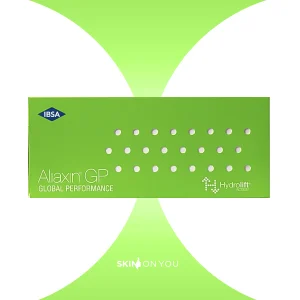
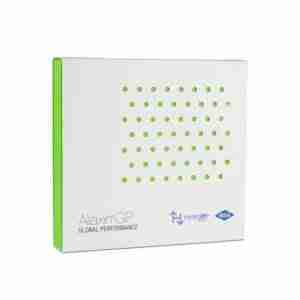
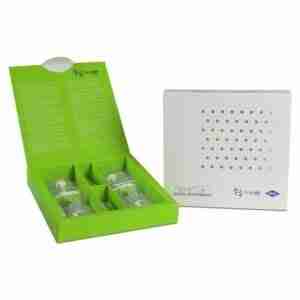
Description
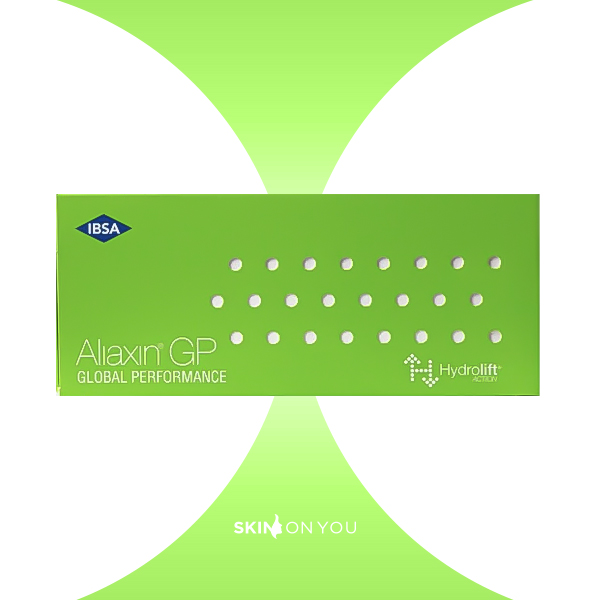
Aliaxin GP is a sterile, resorbable hyaluronic acid dermal filler developed by IBSA Derma as part of the Aliaxin® integrated filler range. It is classified as a temporary injectable medical device intended for soft tissue augmentation in areas requiring moderate volumisation combined with structural support. The formulation is based on ultrapure, biofermentative, non-animal derived hyaluronic acid, processed using IBSA’s proprietary manufacturing technology to achieve controlled viscoelastic and cohesive properties .
Clinically, Aliaxin GP is indicated for correction of moderate facial volume loss and contour definition, including areas where balanced projection and tissue integration are required. Its rheological profile allows the filler to maintain shape while adapting to facial movement, making it suitable for mid-dermal to deeper soft tissue applications as defined by the manufacturer. The product is gradually biodegraded through physiological metabolic pathways and is intended exclusively for administration by qualified medical professionals in accordance with the official Instructions for Use (IFU) .
What Aliaxin GP Is Similar To
Aliaxin GP belongs to the category of hyaluronic acid dermal fillers formulated for moderate volumisation and contour correction. Fillers in this category are characterised by intermediate elasticity, sufficient lifting capacity, and controlled tissue integration.
For clinical orientation, Aliaxin GP can be compared to products such as Juvederm® Volift or Restylane® Defyne. Like Aliaxin GP, these fillers are HA-based and designed to restore facial contours while maintaining natural facial dynamics. Differences between these products may relate to crosslinking technology, HA concentration, and gel cohesivity, which can influence handling characteristics, firmness, and duration of effect.
Within the Aliaxin® range, GP is positioned between softer fillers intended for superficial applications and more robust fillers designed for deep structural support.
This comparison is provided for clinical orientation only and does not imply interchangeability.
Treatment Areas / Indications
Based on available manufacturer and distributor information, Aliaxin GP is indicated for:
– Facial volume restoration
– Facial contour correction
Specific anatomical treatment areas are not comprehensively listed in publicly available IFU summaries. Therefore, detailed treatment areas are considered not provided by manufacturer .
Usage / Administration (IFU-only section)
All administration parameters must strictly follow the manufacturer’s official Instructions for Use.
Injection depth: not provided by manufacturer
Volume per injection point: not provided by manufacturer
Needle gauge: not provided by manufacturer
Frequency / number of sessions: not provided by manufacturer
Aliaxin GP must be administered only by qualified medical professionals experienced in injectable aesthetic procedures, under aseptic conditions, and in compliance with applicable local regulations and the official IFU.
Ingredient List
– Hyaluronic acid (concentration not provided by manufacturer)
– Sodium chloride
– Phosphate buffer
– Water for injections
Lidocaine content: not provided by manufacturer .
Presentation & Longevity
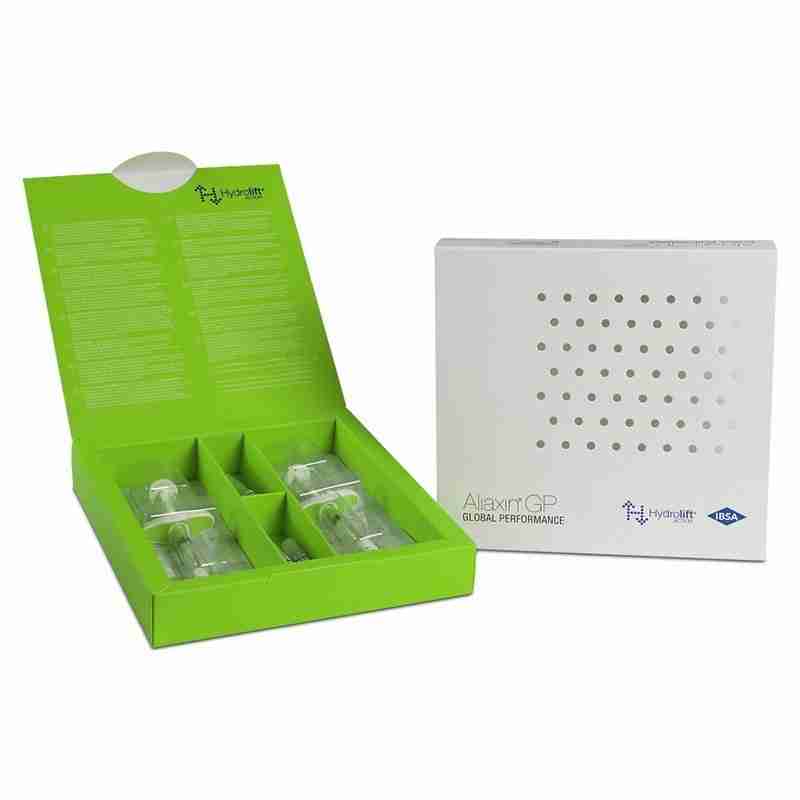
Presentation: 2 × 1 mL prefilled sterile syringes
Packaging: single-use, sterile medical device
Shelf life: not provided by manufacturer
Longevity of aesthetic effect: not provided by manufacturer
Clinical duration may vary depending on patient metabolism, injection site, technique, and individual biological factors .
Safety Notes / Contraindications
According to standard safety guidance for hyaluronic acid dermal fillers and available public documentation:
– Contraindicated in patients with known hypersensitivity to hyaluronic acid or any formulation components
– Should not be injected into areas with active infection or inflammation
– Not recommended for use during pregnancy or breastfeeding unless explicitly stated by the manufacturer
– Caution is advised in patients with autoimmune disorders or a history of severe allergic reactions
Practitioners should always consult the full IFU before use .
Regulatory Status
Aliaxin GP is a CE-marked medical device intended for professional aesthetic use.
UKCA marking or additional regulatory classifications are not specified in publicly available documentation and should be verified on the product packaging or official manufacturer IFU .
FAQ
What type of filler is Aliaxin GP?
Aliaxin GP is a hyaluronic acid dermal filler designed for temporary soft tissue augmentation. It is formulated to provide moderate volumisation with balanced elasticity, supporting facial contour correction while maintaining natural movement. The HA used is biofermentative and non-animal derived, ensuring gradual resorption through physiological metabolic processes .
Is Aliaxin GP suitable for lip treatments?
Aliaxin GP is primarily intended for facial volumisation and contour correction. While some practitioners may use it in lip treatments, this indication is not clearly specified in publicly available manufacturer IFU summaries. Any use outside stated indications should be based on professional judgment and official documentation .
How long do the effects of Aliaxin GP last?
The manufacturer does not specify an exact duration of effect for Aliaxin GP. As with other HA fillers, longevity depends on factors such as injection depth, treatment area, patient metabolism, and lifestyle. Clinicians should assess outcomes individually and follow IFU guidance .
Does Aliaxin GP contain lidocaine?
Publicly available documentation does not confirm the presence or concentration of lidocaine in Aliaxin GP. Practitioners should verify this information directly from the product packaging or official IFU prior to administration .
How does Aliaxin GP differ from other Aliaxin fillers?
Within the Aliaxin® range, GP is positioned as a filler offering balanced projection and adaptability. Softer products in the range are intended for superficial applications, while firmer variants are designed for deeper structural support. Differences are primarily related to rheological properties and intended clinical application .