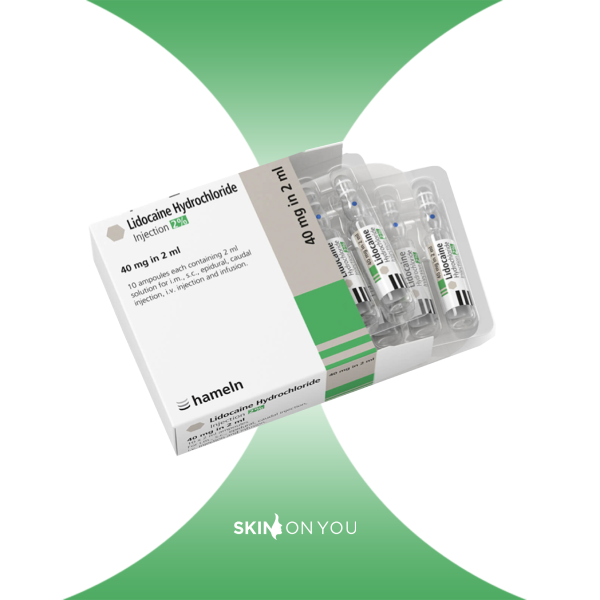
Lidocaine 2% 40mg (10 × 2mL) provides healthcare professionals with a dependable injectable local anaesthetic suitable for a broad range of clinical and outpatient procedures. Each sterile 2 mL ampoule contains 40 mg of lidocaine hydrochloride, delivering consistent dosing and rapid onset of local anaesthesia when administered according to approved prescribing information.
Commonly stocked by aesthetic clinics, dermatology practices, dental surgeries and medical facilities, this product offers an established safety profile supported by decades of clinical use.[1] Clinics comparing the lidocaine 2 injection price, looking to buy Lidocaine 2% 40mg (10 × 2mL) or searching for buy lidocaine 2 percent should ensure purchasing is made through authorised UK pharmaceutical suppliers.
Pricing is available to registered aesthetic professionals only.
Sign in to view pricesLidocaine 2% 40mg (10 × 2mL) is a sterile, prescription-only injectable local anaesthetic containing 40 mg of lidocaine hydrochloride in each 2 mL ampoule (20 mg/mL). It belongs to the amide class of local anaesthetics and produces reversible loss of sensation by blocking voltage-gated sodium channels, thereby preventing the transmission of nerve impulses.
This formulation is widely used by qualified healthcare professionals for local infiltration, peripheral nerve block and other approved regional anaesthetic techniques in accordance with the manufacturer’s Summary of Product Characteristics (SmPC). In medical aesthetics, lidocaine may be used to improve patient comfort during selected procedures when clinically appropriate and within authorised prescribing guidance. It is supplied as a sterile solution for injection and should only be administered by trained medical professionals familiar with local anaesthetic techniques, dosage calculations and emergency management of potential adverse reactions.
Lidocaine hydrochloride injection belongs to the amide local anaesthetic class and is comparable to other injectable lidocaine formulations, including Lidocaine 1% Injection and higher-volume Lidocaine 2% 100mg (5mL) presentations. These products share the same mechanism of action by temporarily blocking sodium channels within peripheral nerves to produce reversible local anaesthesia.
The principal difference between formulations lies in concentration and presentation. While both 2% products contain 20 mg/mL, this presentation provides a total dose of 40 mg per ampoule, making it suitable for procedures requiring a smaller administered volume. Selection of formulation depends on the intended clinical procedure and dosing requirements rather than efficacy alone.
Unlike dermal fillers, skin boosters or regenerative injectables such as Profhilo®, lidocaine has no volumising or tissue-remodelling properties. Its function is solely to provide temporary local anaesthesia.
This comparison is provided for clinical orientation only and does not imply interchangeability.
According to the manufacturer’s prescribing information, Lidocaine Hydrochloride Injection may be indicated for local or regional anaesthesia in appropriately selected procedures, including:
This medicine should be administered only by qualified healthcare professionals experienced in local anaesthetic techniques and under appropriate aseptic conditions.
The manufacturer advises that dosage should be individualised according to:
Some practitioners use injectable lidocaine before aesthetic treatments to improve procedural comfort; this approach is not specifically described within the manufacturer’s official prescribing information.
Hyaluronic acid concentration: Not applicable.
Contains lidocaine: Yes – 2%.
The duration of anaesthesia depends on:
The manufacturer does not provide a single fixed duration applicable to all procedures.
Lidocaine injection should only be administered where appropriate monitoring equipment and resuscitation facilities are immediately available.Contraindications include
Precautions include
Lidocaine 2% Injection is used to provide temporary local or regional anaesthesia during a variety of medical procedures. It reduces pain by blocking nerve impulse transmission at the site of administration. The exact indication depends on the authorised anaesthetic technique selected by the healthcare professional and the patient’s clinical requirements.
Lidocaine is an amide local anaesthetic that reversibly blocks voltage-gated sodium channels within nerve fibres. This prevents electrical impulses from travelling along sensory nerves, temporarily interrupting pain transmission until the medicine is metabolised and normal nerve conduction returns.
Qualified clinicians may use injectable lidocaine to improve comfort during selected aesthetic procedures when clinically appropriate. However, the manufacturer’s prescribing information does not include dedicated protocols for cosmetic applications. Administration should always comply with approved prescribing guidance and local clinical governance.
The duration of anaesthesia varies according to the administered dose, anatomical location, vascularity of the tissue and anaesthetic technique used. Because these variables differ considerably, the manufacturer does not specify a universal duration applicable to every procedure.
Both formulations contain the same concentration of lidocaine hydrochloride (20 mg/mL). The primary difference is the total amount of active ingredient supplied per ampoule. The 2 mL presentation contains 40 mg, whereas the 5 mL presentation contains 100 mg, allowing clinicians to choose the most appropriate presentation for the planned procedure while remaining within recommended dosing guidelines.
Let’s talk on WhatsApp